"I can no longer think what I want to think. My thoughts have been replaced by moving images" (Benjamin 267)
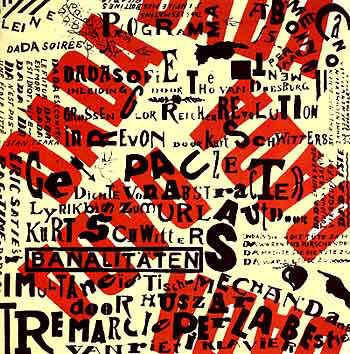
Dada poetry makes use of "linguistic refuse" (266) by highlighting the "uselessness of those works as objects of contemplative immersion" (266); it embraces the fragmentation reproducibility brings by celebrating the discrete, the insignificant and the inconsequential. In doing this, Dadaism elevates the individual mass consumer over the creators of mass capital culture. However, Dadaism also does this in a humourous way, imbuing all of its objects with a self-referential ironical awareness.
Its humour, as such, is subversive and form-shaking. As laughter is always a means to reaffirm the self, Dadaism sought to restore the self whole from the tendency of reproducible technologies to chop all things down into discrete parts. In addition, it reappropriated the individual over the masses, combating the idea of the passive, gullible consumer willing to 'buy' into any reality, no matter how cheap.